 Many people would call it “chance” while some others “providence” is the more accurate word. We make reference to the meeting of two men on a busy Boston street in the year 1832. It was out of the meeting that one of the greatest examples of American literature and music emerged.
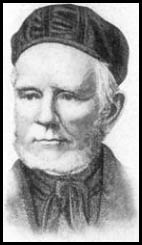
One was Lowell Mason (born: Medfield, Massachusetts, 1792 / died: Orange, New Jersey, 1872) who spent the first part of his adult life in Savannah, Georgia. There he worked at a dry-goods store while he fostered his strong desire to learn music theory. It was there that he started to write his first music. Before long, he was the music leader in the Independent Presbyterian Church, then the choir director and organist. He published his first hymnal while in Savannah. He took up a banking job, which suited him better monetarily.
Mason then moved to Boston, continuing his banking interest, and became an important figure in the music scene, became co-founder of the Boston Academy of Music in 1833, taught the first music classes in American public school, and five years later was appointed music superintendent of the Boston school system. During that time, he sat music to the nursery rhyme “Mary had a Little Lamb”. In all, he would set music to over 1600 poems and would be awarded a doctorial in music. The last part of his music career was spent with the Fifth Avenue Presbyterian Church in New York City. He was a major mover in congregational singing in the US.
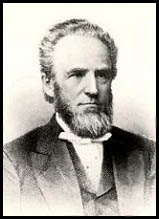 The other man of interest on the Boston street that day was Ray Palmer (born: Little Compton, Roade Island, 1808 / died: Newarrk, New Jersey, 1887). He was educated at the Phillips Academy and later moved to Boston where he worked in a dry-goods store while struggling through his college years at Yale. He also taught at a girl's school for extra income in New Haven. For ten years he had burned the candle at both ends, wondering if he could carry on. One night in 1830, he was reading a brief German poem that inspired him to write down a poem that he transfered that very evening to a small morocco-bound notebook that he carried in his coat pocket. He would from time to time pull out, read, and as we would say these days, use it to “focus”. He later said that, "The words of the hymn were born of my own soul and with very little effort." By 1835, now an ordained minister in the Congregationalist Church, he had been the minister in Bath, Maine for nineteen years and was known as the editor of The Sabboth Hymn-Book (1858) and several other publications.
Lowell Mason was a busy man, but he took the time to stop and talk to Ray Palmer that day in Boston. Mason was putting together a new hymnal and needed material and asked Palmer if he had anything to contribute. He was shown the notebook with the poem. A nearby store provided a piece of paper that Mason used to make a quick copy. Finishing, Mason turned to Palmer and said, “Mr. Palmer, you may do many good things, but posterity will remember you as the author of ‘My Faith Looks Up to Thee.”
But good lyrics alone do not a successful song make. That evening, Lowell Mason set to music Ray Palmer’s first and greatest hymn. A poem, written for no other purpose than to bolster his own faltering courage, would immortalize Ray Palmer in just about every hymnal written from that time until now and would bolster the faltering courage of many singers. In fact, only nine other songs are listed in all the hymnals covered in our index file.
Other songs by Ray Palmer are Lord My Weak Thought in Vain Would Climb and Take Me O My Father Take Me, which are usually only found in Methodist hymnals. He was the first American to translate Latin hymns into English, his best known Jesus, Thou Joy of Loving Hearts from the writings of Bernard of Clairvaux.
Our index file lists some thirty songs which Lowell Mason set to music, including Nearer, My God, to Thee and When I Survey the Wondrous Cross. He even wrote the music first used to publish Amazing Grace in American, but it lacked the success of the music later used by Edwin Excell.
Sources:
A Hymn is Born / Bonner / 1959 / Broadman Press
A Treasury of Hymn Stories Wells / 1945 / Baker Books
cyberhymnal
Great Christian Hymn Writers / Smith & Carlson / 1997 / Crossway Books
Hymns and History / McCann / 1997 / ACU Press
Hymns of Faith / Reynolds / 1967 / Broadman Press
Stories of Hymns We Love / Rudin / 1941 / John Rudin & Co., Inc.
Then Sings My Soul # 1 Morgan / 2003 / Thomas Nelson Publishers
Wikipedia